What do you do when you find yourself standing between 150 bloodthirsty vultures and a human body on a Tibetan mountaintop? You swing, kick, and question every travel decision you’ve ever made. Days 7 through 9 of my Tibet series took me to the sacred Yamdrok Lake, the world’s loneliest monk, a chaotic visit to the hot springs, and ultimately to the most unforgettable travel experience of my life. Here is how it unfolded.
Leaving Lhasa for Tibet’s Sacred Waters
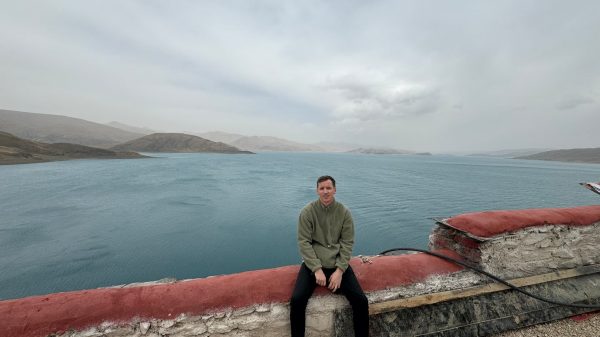
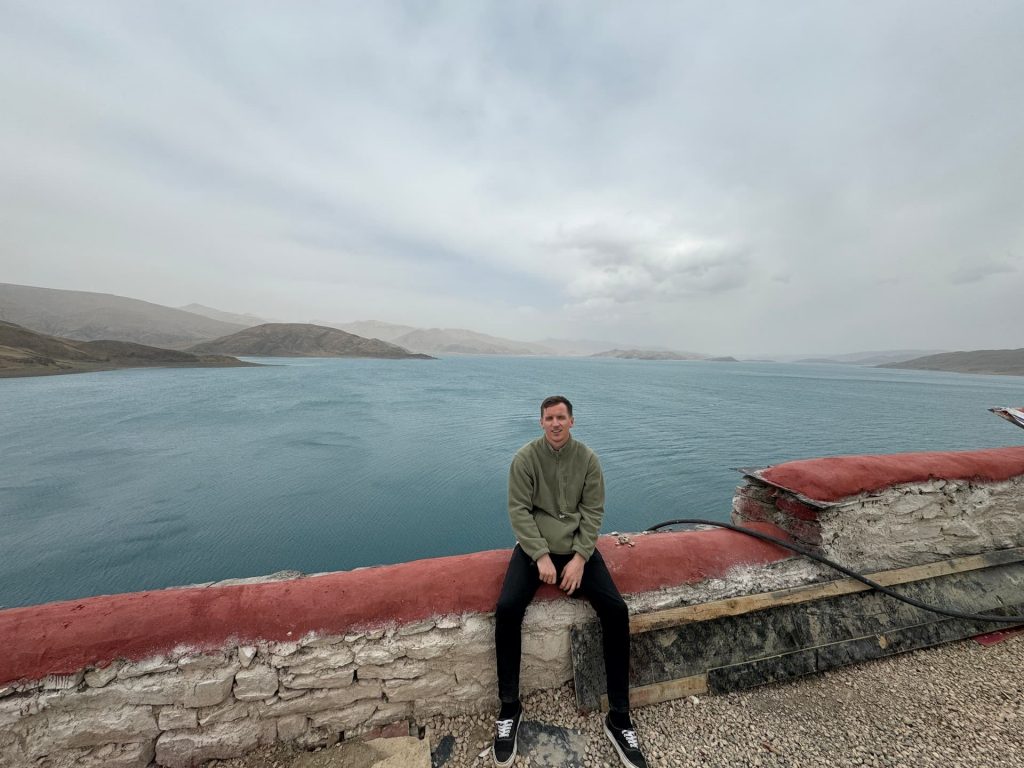
My most horrifying travel experience in Tibet began when we left Lhasa to visit the sacred Yamdrok Lake and the loneliest monk in the world.
The drive is about 3 hours to 4,700m. Consequently, this shows the difference between Europe and Asia. For example, Mont Blanc, Europe’s highest peak, is just under 5,000m, yet in Asia, there are roads that reach nearly the same height.
WHERE IS YAMDROK LAKE?
Yamdrok Lake
The Journey to Yamdrok Lake Begins
Meeting the Famous Tibetan Mastiffs on the Road to Yamdrok
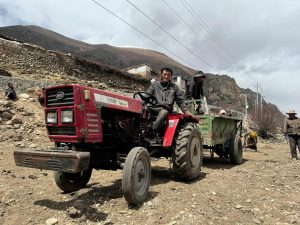
On our way up the mountain there are various laybys used by the tourists to take photos of the incredible views and stop for a bite at the food stalls. Among them, however, are the famous Tibetan Mastiffs, known to be one of the fiercest dogs in the world!
These dogs, though, seemed to be more docile and relaxed and were available for some photos. Bear in mind, however, this would be a stark contrast to my experience in a few days’ time.


My most horrifying travel experience
DAILY INFO….
- HOTEL –
Shambhala Palace Hotel
Some random place - ATTRACTIONS –
Monastery at Yamdrok Lake
Dezhong Hot Springs
Drigung Monastery Sky Burial
LONELIEST MONK
After a few hours driving, we arrived at the temple of the loneliest monk. We saw one or two locals, but nothing else stood between Lhasa and here. I think the nearest town is over 1 hour away!
We had a quick walk around and then got chatting to the senior, who gave us an idea of his daily routine. He spends much of his day in the monastery, waiting to greet locals and answer questions. He has been doing the same for over 30 years!! What amazing commitment and dedication! Unfortunately, like a lot of Tibet, it wasn’t possible to take photos.




My Dezhong Hot Spring Experience in Tibet Did Not Go as Planned
This morning, we headed back out to Lhasa to explore the hot springs, around 3 hours outside of the city. I’ll be honest, I expected something very remote with hardly any people; however, I arrived at something like a naked rush hour in London’s underground!
There were tons of people, so many that there was no way you could access the springs without accidentally brushing past a few obstacles 🍆… It turns out it was the start of their annual holiday, so we decided to give it a miss. What a story that could have been!

My most horrifying travel experience


RELATED READ: A NAKED SWEDE AND ANGKOR WAT
The Schmotel Experience
It’s back with the schmotels on this trip, as we checked into a place with no shower or toilet. The best we have is a hole in the ground, which I have yet to master without almost falling into it, and that’s before the wretched smell knocks you out first!


My most horrifying travel experience
Witnessing a Tibetan Sky Burial Was the Hardest Thing I’ve Ever Seen
This was the most shocking experience I have ever had during my travels. For the record, I fully respect the culture and the wishes of the local people. I can appreciate what is going on and why, but watching the sky burial was very difficult. At the same time, it was important to watch with respect because many of the local people are here to watch over their loved ones, something that would be much harder for me.

My most horrifying travel experience
What Is a Sky Burial?
How do I explain this? A sky burial is a Tibetan funerary practice where the dead person’s body is placed on a mountaintop to be eaten by scavenging birds, in this case, vultures. This ritual reflects the Buddhist belief in the transitory nature of life and the importance of returning the body to nature, allowing it to serve as nourishment for other living beings.
People consider the ceremony an act of generosity and compassion, symbolizing the soul’s release and transition into the next life. It’s conducted with reverence and respect, usually in the presence of monks and family members.


FACTS ABOUT SKY BURIAL:
- Sky burial is a funeral practice where the deceased is placed on a mountaintop or other high place to be exposed to the elements and scavenging birds.
- In Tibetan Buddhism, sky burial is seen as a compassionate act of giving back to nature. They leave the body for vultures to consume, symbolizing the return of the remains to the sky, earth, and water.
- Sky burial serves practical purposes in regions where burial or cremation may be difficult due to factors like permafrost or scarcity of wood for cremation as it doesn’t require land for burial or fuel for cremation.
Pushing Back 150 Bloodthirsty Vultures
At first, I was pulled into a group to push the vultures away so the butchers could begin their work. I’m not sure I have done anything more frightening than telling 150 blood thirsty vultures to get the fuck back, or they will get a size 10 to the back of the head. It was just 5 minutes in when a few vultures made a break for it, and the rest followed. I now found myself in the middle of a vulture stampede, a crazy experience.
The vultures quickly made their way down to the bodies, which were already opened up by the butchers, and absolutely devoured one of the bodies in no time. Then the call came for us to push the vultures back again. I thought they were having a laugh, but after enough swinging a kicking, they began to move back, and it allowed the butchers enough time to finish their work.

Photo sourced online
When It Became More Dangerous
Once the vultures were released, it was another stampede, and they devoured the bodies in minutes with brutal efficiency. At this point, with just bones in the mix, it became dangerous, and everyone was told to leave. The vultures often throw bones around, and if you’re close, they might mistake your leg for another vulture competing for food.


Photos sourced online
TODAY’S YOUTUBE VIDEOS
If you want to see today from a different perspective, and catch a few different stories from the front row, then check out today’s YouTube videos below.
FINAL THOUGHTS
Really not sure what to expect from these past few days, but one thing I do know is that it’s what traveling is all about!!
SAFE TRAVELS, DS x
170/229
Frequently Asked Questions
What is Yamdrok Lake in Tibet known for?
During my trip through Tibet, I found Yamdrok Lake to be one of the most breathtaking places I visited. Its turquoise waters, surrounded by towering mountains and high-altitude roads, make it one of Tibet’s most sacred and scenic lakes.
What are Tibetan Mastiffs like in real life?
When I first saw the Tibetan Mastiffs on the road to Yamdrok Lake, I expected them to be intimidating because of their reputation. Surprisingly, the ones I met were calm, relaxed, and happy to pose for photos with tourists.
What is a sky burial in Tibet?
From what I witnessed, a sky burial is a traditional Tibetan Buddhist funeral ceremony where the body is left on a mountaintop for vultures to consume. It is seen as an act of compassion and a way of returning the body to nature.
Why was witnessing the sky burial so difficult?
For me, watching the sky burial was unlike anything I had ever experienced while travelling. Even though I respected the tradition deeply, seeing the ceremony unfold so closely was extremely intense.
What happened with the vultures during the sky burial?
At one point, I was asked to help push back around 150 vultures so the ceremony could continue safely. It quickly became chaotic when the birds rushed forward all at once, creating one of the most frightening moments of my travels.
What was the Dezhong Hot Springs experience like?
I expected the hot springs near Lhasa to be peaceful and remote, but when I arrived, it was unbelievably crowded because of a local holiday. The atmosphere was so chaotic that we decided not to go into the springs at all.
Did altitude sickness affect your time in Tibet?
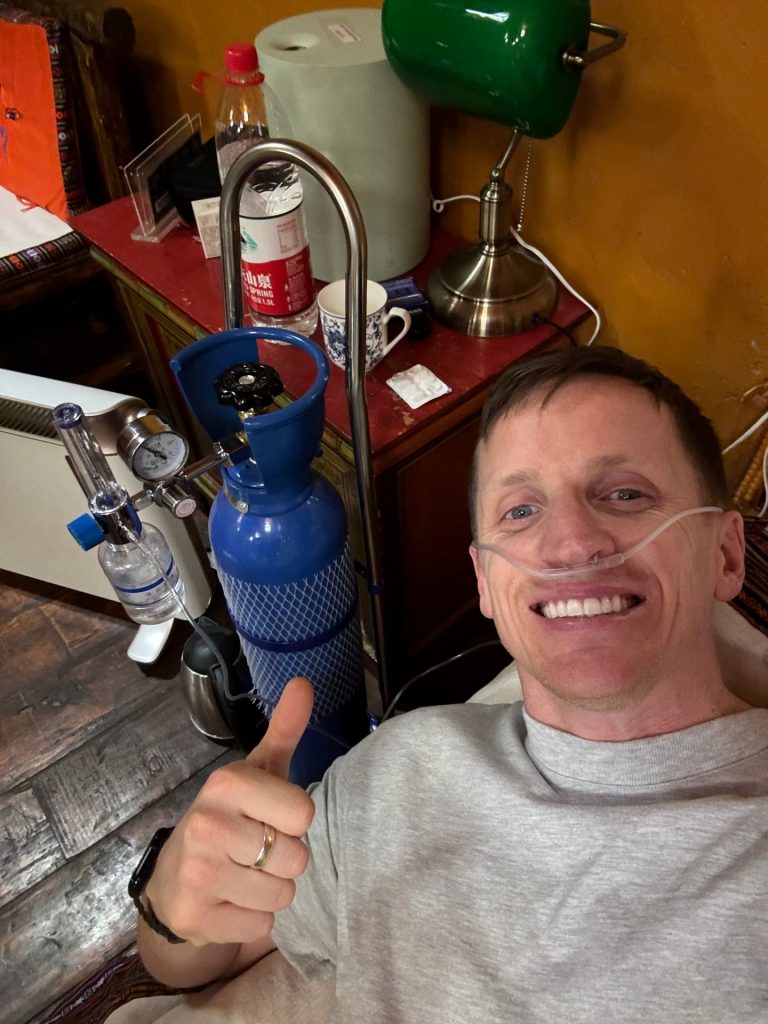
Yes, the altitude definitely caught up with me during my time in Lhasa and the surrounding mountains. At one point, I even had to use an oxygen tank provided by the hotel to help deal with the lack of oxygen.
NEXT UP
We continue day 8 with our homestay as we carry sacks of Yak sh*t!!! Click to read.
This post is part of The Tibetan Series. For the entire series, click here, or for episode 1, click here.
To see a different side of my trip, head to my social channels: YouTube, Instagram & TikTok. Links at the top of the page.

Question Time
- Would you jump in a hot spring full of naked men?
- Would you like to watch the sky burial ceremony?
- Is there anything you wouldn’t try?
Let me know in the comments below . . .